Spine and Extremity Tumors
Background: A tumor is a lump or mass of tissue that forms when the normal tissue grows beyond the normal control. The tumors can be benign or malignant, and can occur in the bones and soft tissues (muscles, tendons, fat etc.) As the tumor grows, it can cause a lump or present as pain, and the rate of growth can vary depending on whether it is benign or malignant, and the types of tumors. Occasionally, infection, stress fractures, and other non-tumor conditions can closely resemble tumors.
In the spine, back pain that is present for more than a few weeks, continues at night, should prompt you to seek evaluation from your doctor or a spine specialist. You should also seek medical advice, if you have a history of cancer and there is a new onset back pain that lasts more than 6 weeks and is progressing.
Benign Tumors: Benign tumors often stay the same size, or can grow and extend locally. They do not spread other sites – metastasize (apart from a couple of benign tumors). Often found incidentally, unless they threaten to grow or invade, these tumors can be watched.
Malignant: A malignant tumor (cancer) grows and can spread locally and also to other far away organs. These tumors can be destructive, if in bone, and cause pain. are likely to spread to other parts of the body and cause problems.
To determine the diagnosis of the tumor, the affected patient is evaluated and based on the symptoms and a clinical examination, the appropriate imaging studies (X-rays, MRI etc.) are ordered.
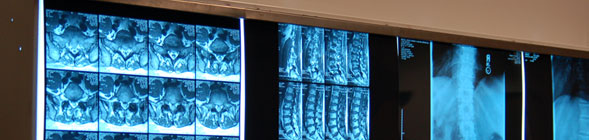
Imaging: X-rays, MRI, CT and/or Bone Scan are ordered, based on the initial evaluation. Based on the findings on these studies, further tests may be done, or, if the diagnosis is made, a biopsy may be performed. Benign tumors that are not destructive or symptomatic may be watched over time for any changes.
Biopsy: A biopsy may be necessary to determine the diagnosis. Sometimes, the biopsy may be performed in the office setting, and other times it is performed in the operating room at the hospital. The tissue is evaluated by the pathologist and various tests are done to determine the type of tumor, and this may take a few days.
Treatment:
- Surgery: Benign and malignant tumors may be surgically removed, and the extent of the surgery and reconstruction is based on the type of the tumor. If the tumor affects the arms and legs, limb salvage surgery will be the goal, and if bones are involved, a joint replacement may be needed. Cancers that have spread to the spine may be treated with kyphoplasty (cement injection into the affected spine to give support) and minimally invasive techniques.
- Chemotherapy: Chemotherapy is the treatment of cancer with drugs that can destroy cancer cells. These drugs often are called "anticancer" drugs. After diagnosis of a malignant tumor, a patient will sometimes be referred to a Hematologist/Oncologist who manages the patients care throughout the chemotherapy.
- Radiation: Radiation therapy is the use of a certain type of ionizing radiation, to kill cancer cells and shrink the tumors, and managed by a Radiation Oncologist. Radiation therapy disrupts or destroys cells in the area being treated by damaging their genetic material, making it difficult for these cells to continue to grow and divide. The goal of radiation therapy is to damage as many cancer cells as possible, while limiting harm to nearby healthy tissue.
